
When you’re exploring mental health treatment, the number of options can feel overwhelming. You may hear about talk therapy, medication management, ketamine therapy, ketamine treatment, or newer options like TMS therapy and wonder how they all compare.
For people living with depression, anxiety disorders, or other mental health challenges, both talk therapy and TMS can play meaningful roles in treatment. But they work in very different ways. Talk therapy helps you understand thoughts, emotions, behaviors, and life patterns. Transcranial Magnetic Stimulation, also called transcranial magnetic stimulation TMS, uses gentle magnetic pulses to stimulate nerve cells in specific brain regions involved in mood regulation.
At Active Path Mental Health, we help patients in Kirkland, Salem, and surrounding communities understand the differences in mental health treatments so they can make informed decisions about care. Whether this is your first episode of depression or anxiety, or you have tried multiple antidepressants without adequate relief, understanding TMS therapy vs talk therapy can help you take the next step in your mental health journey.
Ready to understand how TMS and talk therapy differ? Schedule a consultation with Active Path today.
What Exactly Is TMS Therapy and How Does It Work?
TMS therapy is a noninvasive form of brain stimulation that uses targeted magnetic pulses to stimulate nerve cells in the brain. During a TMS treatment session, a magnetic coil is placed near the scalp, usually over the prefrontal cortex, an area of the brain involved in mood regulation.
TMS is most often used for treating major depressive disorder, especially in treatment-resistant cases. The FDA has cleared repetitive TMS devices for the treatment of depression in adults who have not achieved satisfactory improvement from prior antidepressant medication.
Unlike electroconvulsive therapy, TMS does not require anesthesia, sedation, or a recovery period. Most patients remain awake throughout the treatment session and can return to daily activities afterward.
TMS may be recommended for patients who:
- Have major depressive disorder
- Have tried antidepressant medications without adequate symptom relief
- Have treatment-resistant depression
- Experience medication side effects
- Want a non-medication depression treatment option
- Need a treatment that directly targets brain activity and neural pathways
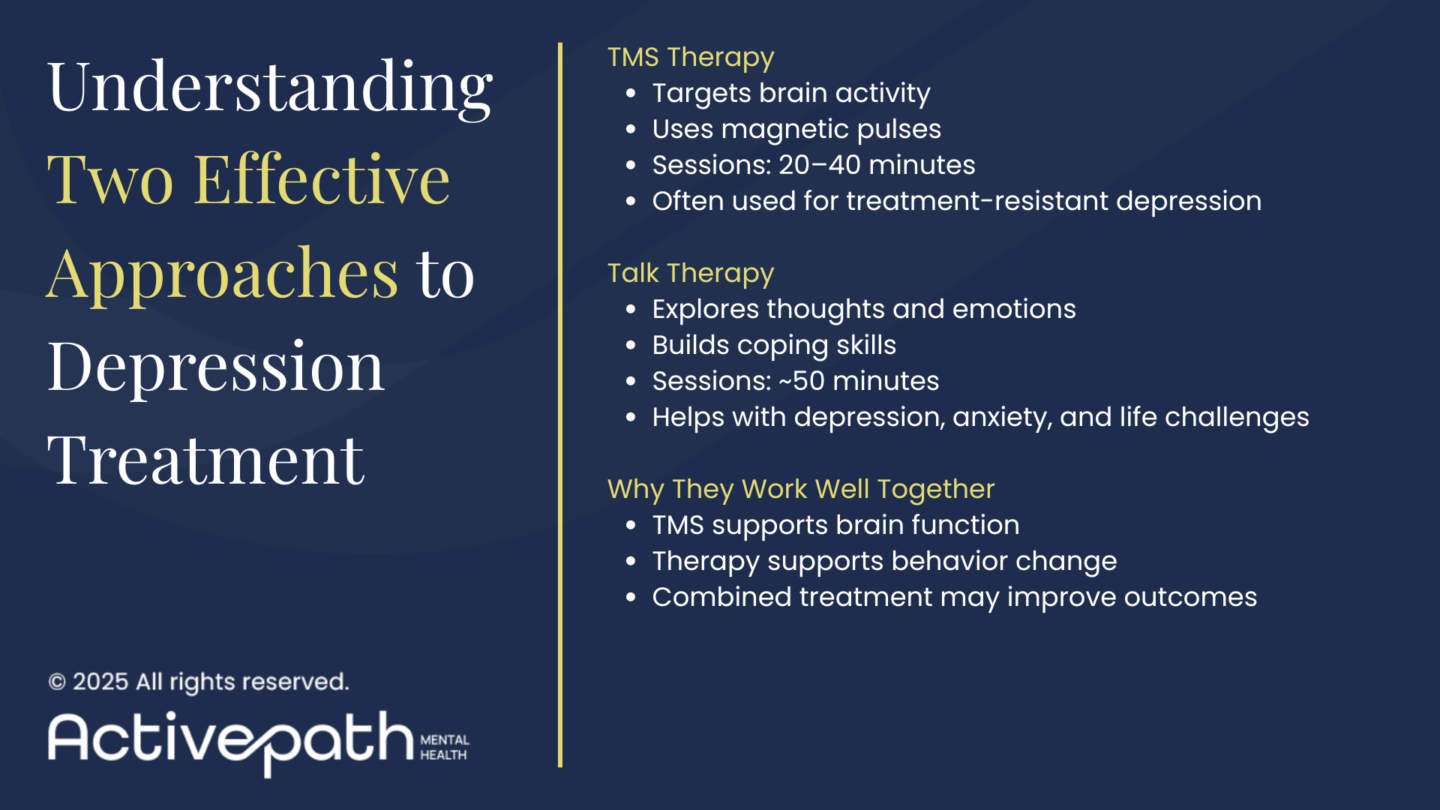
TMS sessions typically last about 3-20 minutes and are often scheduled five days per week for six to eight weeks. Side effects are usually mild and may include scalp discomfort or a mild headache.
While results vary, many patients report improved mood, greater mood stability, and meaningful relief from depression symptoms over the course of treatment.
How Does Talk Therapy Help With Depression and Anxiety?
Talk therapy is one of the most common and effective forms of mental health treatment. Unlike TMS, which focuses on brain activity, traditional talk therapy uses conversation, emotional insight, and psychological techniques to help patients understand and change thoughts, feelings, and behaviors.
The National Institute of Mental Health describes psychotherapy as a treatment that helps people identify and change troubling emotions, thoughts, and behaviors.
Talk therapy can help people with:
- Depression
- Anxiety disorders
- Mood disorders
- Stress
- Trauma
- Relationship challenges
- Obsessive-compulsive disorder
- Other mental health challenges
One common approach is cognitive behavioral therapy CBT, also known as cognitive behavioral therapy. CBT helps patients recognize negative thought patterns, build practical coping strategies, and change behaviors that may contribute to emotional distress.
For depression, talk therapy may focus on rebuilding routines, improving self-talk, processing difficult experiences, and increasing engagement in meaningful activities. For anxiety, therapy may help patients identify triggers, reduce avoidance, practice grounding skills, and become more emotionally regulated.
Talk therapy sessions typically last around 50 minutes and may be scheduled weekly, biweekly, or according to the patient’s treatment plan. Therapy can last a few months or continue longer, depending on the person’s goals, symptoms, and needs.
TMS Therapy vs Talk Therapy: What Is the Main Difference?
The simplest way to understand TMS therapy vs talk therapy is this: TMS focuses on the biological side of depression, while talk therapy focuses on the psychological and emotional side.
TMS uses magnetic pulses to influence brain function and stimulate nerve cells in areas involved in mood regulation. Talk therapy helps patients process emotions, understand thought patterns, and build coping skills.
Both treatments can support mental health, but they work through different pathways.
TMS targets:
- Brain activity
- Neural pathways
- Mood regulation
- Depressive symptoms
- Treatment-resistant cases
Talk therapy targets:
- Negative thought patterns
- Emotional insight
- Coping strategies
- Relationship patterns
- Behavioral change
TMS does not replace talk therapy. For many patients, the two treatments complement one another.
For Whom Is Each Treatment Best Suited?
The right treatment depends on your symptoms, treatment history, preferences, and goals.
Talk Therapy May Be Best If You:
Talk therapy may be a strong starting point if you are experiencing your first episode of depression or anxiety, navigating stress, or looking for coping skills to manage daily life.
It may be especially helpful if you want to:
- Better understand your emotions and thought patterns
- Develop coping strategies
- Process trauma, grief, or major life changes
- Improve relationships
- Manage anxiety symptoms
- Learn skills for emotional regulation
- Participate actively in your healing process
Talk therapy requires active participation. Patients are often asked to reflect between sessions, practice new skills, and explore difficult emotions. Sometimes therapy can cause temporary emotional distress as patients process painful memories or challenging experiences, but this work can also lead to lasting emotional growth.
TMS Therapy May Be Best If You:
TMS may be recommended if depression symptoms have not improved enough with antidepressant medications, talk therapy, or other treatments.
It may be especially helpful if you:
- Have treatment-resistant depression
- Have tried multiple antidepressants
- Experience side effects from medication
- Want a non-medication option
- Have severe depression that makes therapy difficult to engage in
- Need targeted brain stimulation for mood regulation
TMS is often viewed as a short-term commitment compared with long-term therapy because the initial course usually takes place over four to six weeks.
Can TMS and Talk Therapy Be Used Together?
Yes. In fact, many patients benefit from combining TMS and talk therapy. TMS and talk therapy are not competing treatments; they often support different parts of the same recovery process.
TMS targets biological aspects of depression by stimulating nerve cells and supporting healthier brain activity. Talk therapy addresses psychological patterns by helping patients understand emotions, change negative thought patterns, and develop coping skills.
Patients often find that TMS helps them better engage in talk therapy. When severe depression begins to lift, patients may feel more motivated, emotionally present, and able to participate in therapy sessions.
For many patients, combined treatment can support:
- Better therapy engagement
- Improved mood
- Stronger coping skills
- Greater emotional insight
- More lasting relief
- Long-term transformation in depression management
This can be especially important for patients with severe depression or treatment-resistant depression. If someone feels too low, fatigued, or disconnected to fully participate in therapy, TMS may help reduce symptom intensity so therapy becomes more effective.
What Should Patients Expect From Each Treatment?
What to Expect From TMS
During TMS, patients sit comfortably while gentle pulses are delivered to specific brain regions. The treatment does not require sedation or medical supervision in the same way as ketamine therapy or SPRAVATO® nasal spray, but it is administered by trained professionals under the direction of a healthcare provider.
Most patients remain awake, alert, and able to return to their day afterward. A full course of treatment requires consistency, with sessions often scheduled five days per week for four to six weeks.
Patients may not feel immediate relief after the first session. TMS often works gradually as brain activity and neural pathways begin to shift over time.
What to Expect From Talk Therapy
Talk therapy usually begins with an intake appointment. Your therapist will ask about your symptoms, history, current challenges, and treatment goals. Together, you will develop a treatment plan based on your needs.
In therapy sessions, you may discuss stressors, relationships, thought patterns, trauma, coping strategies, or goals for change. Over time, therapy helps patients build emotional insight and practical tools for managing life more effectively.
Talk therapy may feel supportive, challenging, or both. A strong therapeutic relationship can help patients feel safe while exploring difficult subjects and building healthier patterns.
How Active Path Helps You Compare Treatment Options
At Active Path Mental Health, we understand that choosing between treatment options can feel confusing, especially when you are already experiencing depression, anxiety, or other mental health challenges.
Our team provides education, evaluation, and compassionate support to help you understand what may fit your needs. Depending on your symptoms and treatment history, your care may include:
- Talk therapy
- TMS therapy
- Medication management
- Treatment for depression or anxiety
- Support for treatment-resistant depression
- Care coordination with experienced psychiatrists or other providers
- Personalized treatment planning
Our goal is not to push one treatment over another. It is to help you understand your options and build a care plan that supports your mental health, daily functioning, and long-term well-being.
Finding the Treatment That Fits Your Needs
If you are comparing therapy vs TMS, the best next step is a professional evaluation. A provider can help you understand your symptoms, review your treatment history, and recommend options based on your individual needs.
For some patients, talk therapy is the right place to begin. For others, especially those who have tried multiple antidepressants or continue experiencing severe depressive symptoms, TMS may offer a new path forward.
If depression or anxiety symptoms are affecting your daily life, reach out to learn which treatment path may fit your needs.