
If you’ve been living with post-traumatic stress disorder, it’s understandable to wonder whether it will always feel this way. Flashbacks, nightmares, anxiety, emotional numbness, or feeling constantly on alert can become so familiar that imagining life without them may be difficult.
The good news is that PTSD symptoms can improve significantly with treatment. Some people reach a point where they no longer meet the criteria for posttraumatic stress disorder, while others continue to have occasional reactions that become much easier to recognize and manage.
There isn’t one timeline for PTSD recovery. The healing process can depend on the traumatic event, how long symptoms have been present, whether other mental health conditions are involved, and which treatment options someone receives.
Ready to understand what PTSD treatment could look like for you? Connect with Active Path to take the next step.
Can PTSD Symptoms Improve Over Time?
Yes. PTSD doesn’t necessarily have to remain as intense as it feels today.
The Anxiety and Depression Association of America explains that people can experience meaningful improvement with evidence-based treatments, even when symptoms have been present for a long time. Recovery may mean certain reactions disappear completely, while others become less frequent, less severe, or easier to manage.
Healing doesn’t mean you have to forget what happened. The memory can still be there without having the same hold over your emotions, relationships, decisions, or sense of safety.
Someone who developed PTSD after a car accident, for example, might eventually feel comfortable driving again. A person who experienced sexual assault could become better able to recognize triggers, feel safer in relationships, and manage intense fear when difficult memories surface.
Progress may happen gradually. You might notice fewer sleep disturbances, less avoidance, or a faster recovery after something reminds you of the experience. Negative beliefs about yourself or the world may begin to soften, and moments of calm or positive emotions can become easier to access.
You may start noticing real progress even if you’re still dealing with some symptoms.
What Are the Symptoms of PTSD?
People can develop PTSD after experiencing or witnessing a traumatic event, although not everyone who goes through trauma will develop the condition.
Stress reactions immediately afterward are common. Acute stress disorder can involve symptoms similar to PTSD in the first weeks following trauma, while a PTSD diagnosis generally involves symptoms continuing for more than a month and causing significant distress or difficulty functioning. Only a qualified mental health professional can diagnose PTSD.
Symptoms of PTSD are often grouped into several areas, including:
- Intrusive memories, nightmares, or flashbacks
- Avoidance of thoughts, conversations, people, or places connected with the trauma
- Negative alterations in mood or beliefs, including guilt, detachment, or hopelessness
- Heightened stress responses such as irritability, difficulty sleeping, or feeling constantly alert
- Problems concentrating or managing strong emotional reactions
Some people also experience panic attacks, depression, anxiety, or other mental health issues alongside posttraumatic stress.
PTSD can occur after many kinds of traumatic experiences, including military combat, assault, serious accidents, abuse, natural disasters, or other events involving actual or threatened harm. The symptoms may look different from person to person, which is why an individualized evaluation is important.
Why Can PTSD Last for Years?
PTSD involves more than remembering something painful. The brain and body can continue responding to trauma reminders as though danger is still present.
Avoidance often becomes part of that pattern. Staying away from situations, thoughts, or memories connected with the experience may reduce anxiety temporarily, but it can also reinforce the idea that those reminders are unsafe.
Over time, someone may begin organizing more of everyday life around avoiding triggers. They might stop visiting certain places, withdraw from relationships, avoid driving, or steer clear of conversations that bring up difficult memories.
Avoiding trauma-related thoughts, memories, or situations can bring short-term relief, but repeated avoidance can keep PTSD symptoms going over time. Because avoidance can reinforce the fear connected to trauma reminders, many effective treatments gradually help people face those memories, thoughts, or situations in a structured and supported way.
Which Treatments Are Most Effective for PTSD?
Cognitive Processing Therapy (CPT), Prolonged Exposure Therapy (PE), and Eye Movement Desensitization and Reprocessing (EMDR) have some of the strongest research behind them for treating PTSD. The VA/DoD Clinical Practice Guideline recommends these trauma-focused psychotherapies as first-line treatment options for PTSD.
All three approaches address trauma, but they do it differently. Understanding what each treatment actually involves can make it easier to talk with a mental health professional about which option fits your symptoms, preferences, and treatment goals.
Cognitive Processing Therapy
Cognitive Processing Therapy focuses on the beliefs that can develop after trauma. You may blame yourself for what happened, struggle to trust other people, or feel like nowhere is truly safe. CPT helps you examine those beliefs and develop a more balanced understanding of the experience.
According to the National Center for PTSD, CPT typically lasts about 12 sessions and has been studied in dozens of randomized controlled trials. Research also shows that improvements can last after treatment ends.
What some people like about CPT: The therapy gives you a structured way to work through how trauma changed your thinking without requiring repeated, detailed retelling of the event.
What may feel challenging: CPT still asks you to think about painful memories and beliefs. Some people experience emotional discomfort as they work through guilt, fear, trust, or safety concerns.
Prolonged Exposure Therapy
Prolonged Exposure Therapy focuses more directly on avoidance. If PTSD has led you to avoid certain memories, places, activities, or situations, PE helps you gradually approach them in a safe, structured setting.
The National Center for PTSD notes that PE generally lasts eight to 15 sessions and has been studied in dozens of randomized controlled trials. The same source reports that about 53% of people who start PE no longer meet PTSD diagnostic criteria after treatment, increasing to about 68% among people who complete the full course.
What some people like about PE: The treatment directly addresses fears and avoidance patterns that have started limiting everyday life. As therapy progresses, situations that once felt overwhelming can become easier to handle.
What may feel challenging: PE asks you to intentionally approach memories and safe situations you’ve been avoiding, so treatment can feel uncomfortable at first. It also requires work between sessions, which takes time and commitment.
Eye Movement Desensitization and Reprocessing
EMDR takes another approach to processing traumatic memories. During treatment, you bring parts of the trauma to mind while focusing on bilateral stimulation, such as guided eye movements, sounds, or tapping.
The VA/DoD Clinical Practice Guideline includes EMDR among the trauma-focused psychotherapies it recommends for PTSD.
What some people like about EMDR: You focus on the traumatic memory without having to describe every detail out loud, which may feel more manageable for people who find extended verbal retelling difficult.
What may feel challenging: EMDR still requires you to focus on distressing memories, thoughts, emotions, and physical sensations. Strong feelings can come up during treatment even when you aren’t describing the event in detail.
How Do I Choose Between CPT, PE, and EMDR?
There isn’t one PTSD treatment that works best for everyone. CPT may appeal to someone who struggles with guilt, trust, safety, or other negative beliefs connected to trauma. PE may fit someone whose life has become increasingly shaped by avoidance, while EMDR offers another way to process traumatic memories without relying as heavily on detailed verbal discussion.
Talk with a mental health professional about the format, time commitment, possible discomfort, and goals of each approach. Understanding what treatment will actually ask of you can make the decision feel much less abstract and help you choose an option you feel prepared to engage in.
Is Trauma-Focused Therapy Better Than Medication?
For many people with PTSD, trauma-focused therapy is an important first step because it directly addresses the memories, beliefs, and avoidance patterns connected to what happened. Approaches such as Cognitive Processing Therapy, Prolonged Exposure, and EMDR can help reduce symptoms by working through the parts of trauma that still feel active in everyday life. Medication can also be useful, especially when someone is dealing with significant anxiety, depression, sleep problems, or other concerns alongside PTSD.
The right approach depends on the person. Some people may benefit most from therapy, others from medication, and many use a combination of both as part of their treatment plan. What matters is finding an option that feels manageable and fits your symptoms, preferences, and overall mental health needs.
Can Medication Help Treat PTSD Symptoms?
Yes. Medication can help manage certain PTSD symptoms, particularly when anxiety, depression, irritability, or sleep problems are making daily life harder.
Antidepressants such as selective serotonin reuptake inhibitors, or SSRIs, are commonly used as part of PTSD treatment. Sertraline and paroxetine are two options with strong evidence behind them, and venlafaxine may also be considered depending on the patient.
Other medications may sometimes be used for specific concerns, such as recurring nightmares. Because every person responds differently, medication management usually involves checking how symptoms are changing, watching for side effects, and making adjustments when needed.
Medication doesn’t erase trauma or replace the work that can happen in therapy. Instead, it may help lower the intensity of certain symptoms enough to make everyday life and the healing process feel more manageable.
Active Path offers medication management as part of its broader mental health care services, so treatment can evolve as your needs change.
Does Trauma Therapy Mean I Have to Relive Everything?
One of the biggest concerns people have about trauma therapy is the fear that they’ll be expected to immediately revisit every painful detail. That isn’t how treatment has to begin. Different types of trauma therapy work in different ways, and your provider should explain what an approach involves before you get started. Cognitive Processing Therapy focuses more on the beliefs and thought patterns that can develop after trauma. Prolonged Exposure helps people gradually work with memories or situations they’ve been avoiding, while EMDR uses bilateral stimulation as part of processing difficult experiences.
You don’t have to walk into your first appointment ready to share everything that happened. You can start with what you’re dealing with now and what you’d like help with, then go from there at a pace that feels manageable.
What Does Long-Term PTSD Recovery Look Like?
There isn’t a single finish line for PTSD recovery.
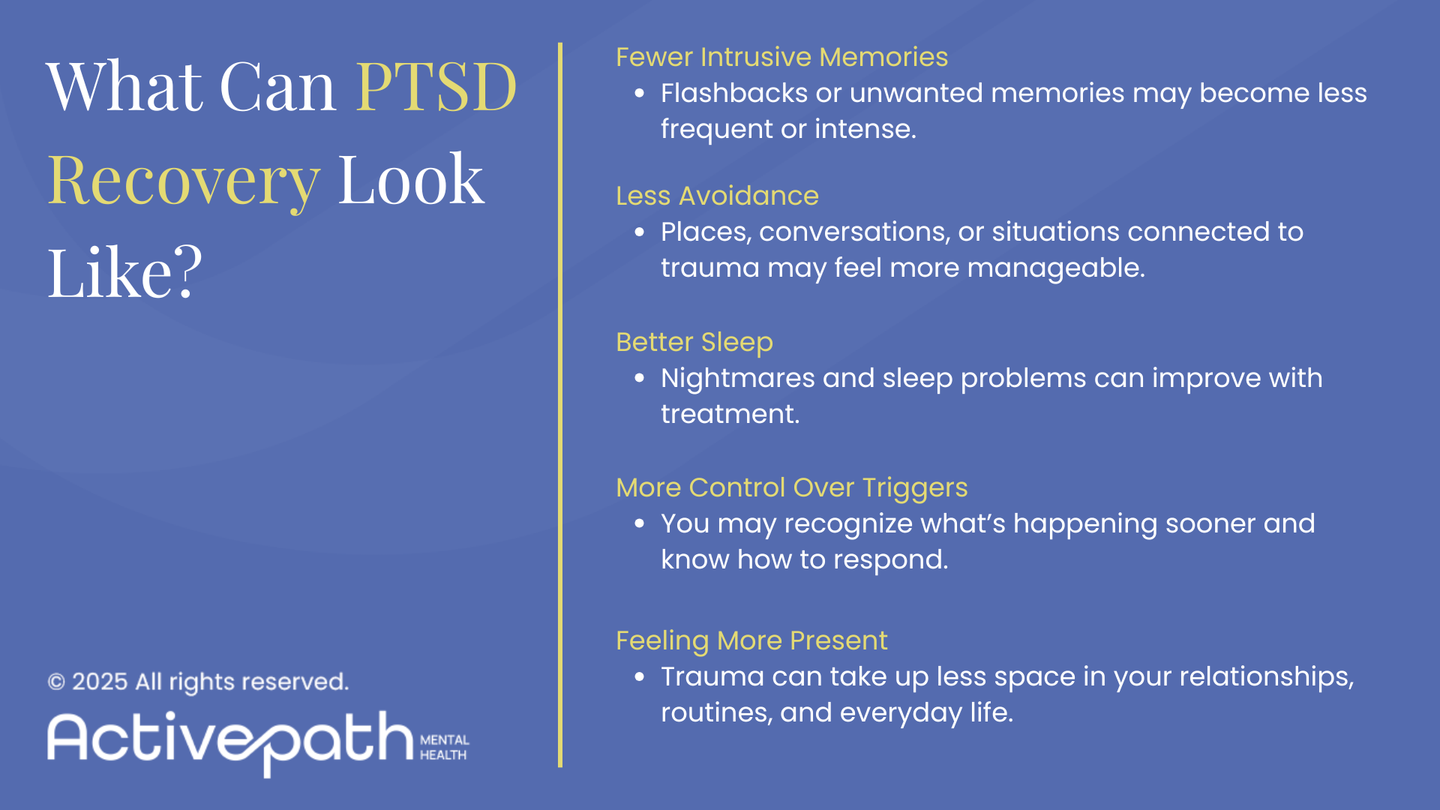
For one person, progress might mean sleeping through the night without frequent nightmares. Someone else may return to places they once avoided, feel safer in close relationships, manage triggers with less anxiety, or go longer periods without intrusive memories disrupting the day.
Recovery can also involve developing stronger stress management skills. You may become better at recognizing when your stress response is increasing, identifying triggers, challenging negative beliefs, or using grounding techniques before symptoms escalate.
Some people complete a course of therapy and continue doing well without regular mental health treatment. Others benefit from checking back in during periods of major stress or after a new traumatic experience.
Neither path means treatment succeeded or failed. Mental health care can change as your needs do.
Can PTSD Symptoms Return After Treatment?
Yes, PTSD symptoms can become more noticeable again during certain periods. Anniversaries, major losses, new stressors, reminders of the original trauma, or other difficult life events may intensify posttraumatic stress for a while. A return of symptoms doesn’t erase the progress you’ve made. In fact, treatment may help you recognize what’s happening sooner and respond with a clearer sense of what helps.
You may already know which grounding strategies work best, when you need to reduce unnecessary stress, who you can contact for support, or when it makes sense to reconnect with a mental health professional. If one treatment approach hasn’t helped enough, other evidence-based options are still worth exploring because no single therapy works the same way for everyone.
PTSD Can Get Better With the Right Support
Living with post-traumatic stress disorder can make the future feel shaped by something that happened in the past, but today’s symptoms don’t necessarily predict how you’ll feel forever.
Effective PTSD treatment can reduce symptoms, improve daily functioning, and help people regain a greater sense of safety and control. For some, recovery may mean symptoms become minimal or disappear. For others, the goal is learning how to manage occasional reactions without allowing trauma to dictate everyday life.
The most effective evidence-based treatments include Cognitive Processing Therapy, Prolonged Exposure, and EMDR, but the right care plan should still reflect your history, preferences, current symptoms, and goals.
If trauma is continuing to affect your sleep, relationships, emotions, or ability to function, Active Path can help you explore your next step. Connect with Active Path to learn more about talk therapy, medication management, and personalized mental health treatment in Oregon and Washington.