
Depression doesn’t always get noticeably worse overnight. Sometimes the changes happen so gradually that you adjust to them without realizing how much harder everyday life has become. You start sleeping later, cancel plans more frequently, struggle to concentrate at work, or lose interest in things you usually care about.
Recognizing worsening depression early gives you a chance to ask for support before your symptoms become overwhelming. Pay attention to changes in your mood, energy, sleep, thinking, relationships, and day-to-day functioning. Those shifts can tell you when it’s time to reach out to a mental health professional.
A difficult few days don’t automatically mean your depression has become more severe. Look at the larger pattern. Are your symptoms showing up more frequently, lasting longer, interfering with everyday life, or feeling noticeably different from what you usually experience?
If your current depression treatment doesn’t seem to be helping as much as it once did, Active Path can help you explore what needs to change in your care plan.
What Are the Early Warning Signs That Depression Is Getting Worse?
Depression looks different from one person to another, so changes from your own normal patterns matter most. If you’re living with major depression, also called major depressive disorder or clinical depression, you may notice familiar symptoms becoming more intense or affecting new areas of your life.
Common signs include:
- Feeling sad, hopeless, empty, or irritable more frequently
- Losing interest in activities or relationships you usually enjoy
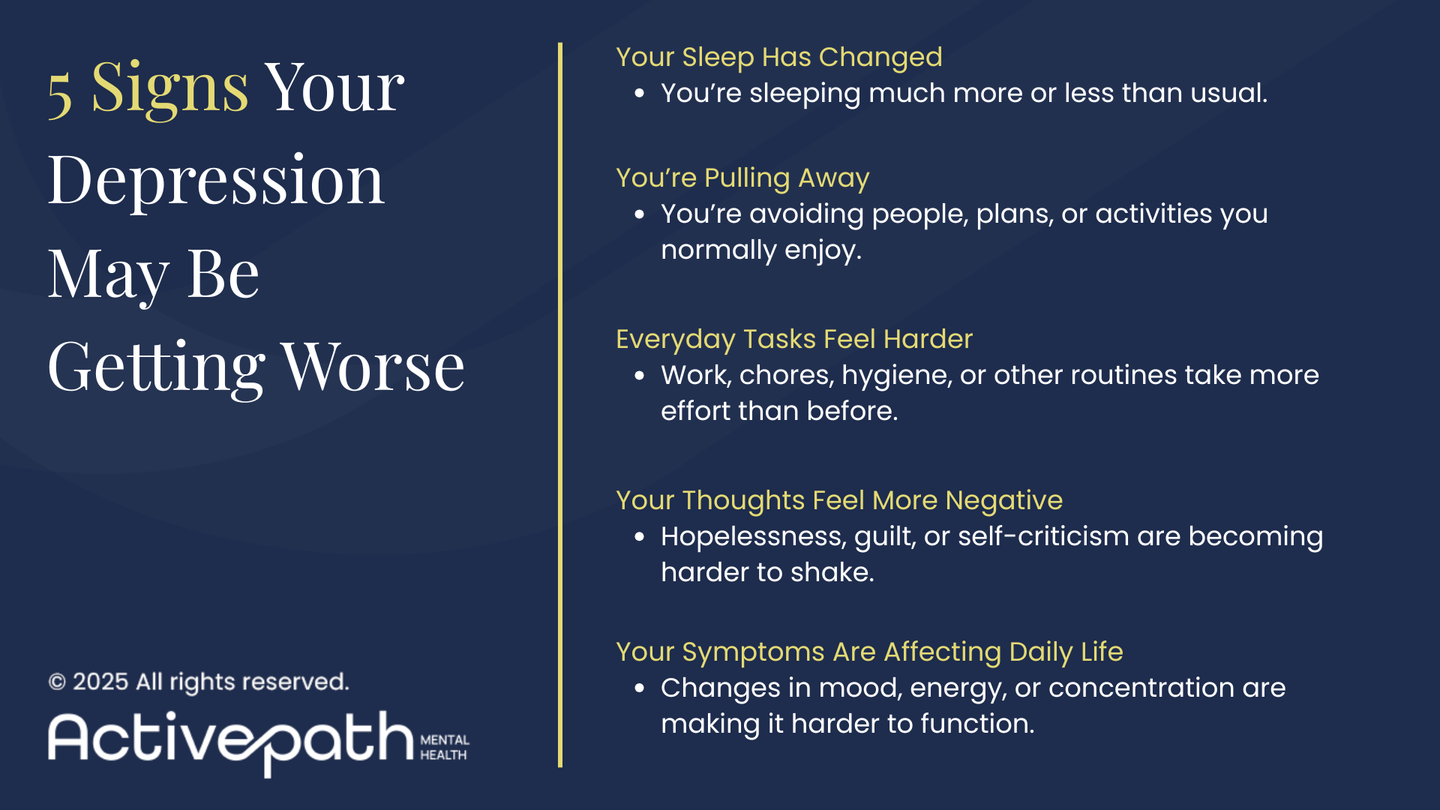
- Sleeping much more or less than usual
- Feeling more tired or having less energy
- Struggling to concentrate, remember information, or make decisions
- Pulling away from friends, family members, or coworkers
- Falling behind on work, household tasks, hygiene, or other routines
- Experiencing more negative thoughts, guilt, or low self-esteem
- Noticing changes in appetite or weight
- Dealing with unexplained physical aches, headaches, or digestive problems
A depressive episode doesn’t only affect your mood. Depression also affects sleep, appetite, energy, concentration, digestion, and how you experience pain.
Ask yourself whether you’re doing less of the things that normally keep your life moving. Maybe you’ve stopped answering texts, skipped workouts, let household tasks pile up, or can’t focus on responsibilities that usually feel manageable. One change may not tell you much on its own, but several shifts happening together deserve your attention.
Depression Can Get Worse Gradually
A dramatic decline is usually easier to spot than a slow one. If you suddenly can’t get out of bed or stop showing up to work, you’ll probably know something has changed. Gradual symptoms blend into your routine and become harder to recognize.
You may start going to bed earlier because you feel tired, then stop making dinner because cooking takes too much effort. Before long, you’re spending most evenings alone and turning down plans you once looked forward to.
Watch for patterns such as increased withdrawal, fatigue, disrupted sleep, and loss of interest. Tracking your mood and behavior makes those patterns easier to see.
You don’t need a complicated system. Write down a few notes each day about your sleep, energy, stress, appetite, and overall mood. Over time, those entries show whether your symptoms are improving, staying about the same, or getting worse.
Why Might My Depression Symptoms Be Getting Worse?
Depression rarely comes down to one simple cause. Biological, psychological, environmental, and physical health factors all influence how you feel.
Major stress and life changes can intensify depressive symptoms, even when you felt relatively stable beforehand. A breakup, job loss, grief, financial pressure, caregiving responsibilities, or family conflict puts additional strain on your mental health.
Seasonal changes affect some people, too. Shorter daylight hours during the winter contribute to a seasonal pattern of depression for people who notice their symptoms returning around the same time each year.
Your routines matter as well. Losing regular social contact, movement, meals, sleep schedules, or meaningful activities takes away some of the structure that supports your mood. Depression then makes those habits harder to maintain, creating a cycle where isolation and inactivity deepen your symptoms.
Physical health plays a role, too. Chronic pain, thyroid disorders, hormonal changes, and other medical conditions contribute to fatigue, mood changes, sleep disruption, or difficulty concentrating. Certain medications also affect mental health. When symptoms change, your provider may review your prescriptions, health history, and lab results to understand what’s contributing to the shift.
When Should I Contact a Mental Health Professional?
You don’t need to wait until you’re in crisis to seek treatment.
Reach out when depressive symptoms become more intense, interfere with everyday responsibilities, or continue despite the strategies you normally use.
Persistent sadness, loss of interest, low energy, sleep changes, difficulty concentrating, or trouble completing usual activities for two weeks or longer all signal that it’s worth talking with a mental health professional. Don’t treat that two-week guideline as a waiting period. Contact a provider sooner if you notice a rapid decline, struggle to manage basic daily needs, or simply know that something feels significantly different.
Talk with your provider if the treatment you’re already receiving no longer works as well, too. Depression changes over time, and your treatment plan should respond to those changes.
What If I’m Having Suicidal Thoughts or Thinking About Self-Harm?
Suicidal thoughts or urges to self-harm require immediate attention.
If you’re thinking about harming yourself, don’t feel confident that you can stay safe, or believe you’re in immediate danger, seek emergency support right away. Call or text the 988 Suicide & Crisis Lifeline at 988, call 911 during a life-threatening emergency, or go to the nearest emergency department.
You don’t need to decide whether your thoughts are “serious enough” before asking for help. Any increase in suicidal thinking, self-harm urges, or overwhelming hopelessness deserves prompt support.
What Treatments Can Help When Depression Is Getting Worse?
Worsening symptoms don’t automatically mean your previous treatment failed. They signal that it’s time to look at your current approach and decide whether something needs to change.
Depression treatment includes psychotherapy, medication, brain stimulation therapies, and combinations of these approaches.
Talk Therapy
Talk therapy helps you understand patterns in your thoughts, emotions, and behaviors while building strategies for managing symptoms.
Cognitive behavioral therapy, or CBT, focuses on identifying unhelpful thought patterns, strengthening coping skills, and changing behaviors that contribute to depression.
You can attend psychotherapy in person or virtually. Therapy also gives you space to work through stressful events, grief, anxiety disorders, chronic pain, relationship challenges, and other concerns that affect your symptoms.
Medication Management
Medication also plays an important role in many depression treatment plans.
Providers commonly prescribe selective serotonin reuptake inhibitors and other antidepressants for major depressive disorder. Finding the right medication and dosage takes time, and antidepressants usually need several weeks to reach their full effect. Some people need adjustments before they experience meaningful improvement.
Contact the provider managing your treatment if your depression gets worse after you start a new medication or change a dose. Don’t stop an antidepressant suddenly unless your provider instructs you to do so.
Medication management becomes especially important when bipolar disorder, panic disorder, substance use disorder, or another condition affects treatment decisions.
TMS Therapy
People with treatment-resistant depression have additional options when standard treatments haven’t provided enough relief.
Transcranial magnetic stimulation, or TMS, uses magnetic pulses to stimulate areas of the brain involved in mood regulation. Providers use TMS to treat major depressive disorder in people who haven’t gotten enough relief from previous antidepressant treatments.
Active Path provides TMS therapy for eligible patients in Oregon and Washington.
SPRAVATO®
SPRAVATO® gives certain adults with treatment-resistant depression another treatment option.
SPRAVATO® contains esketamine and works differently from traditional antidepressants. Patients receive it in a certified clinical setting under medical supervision.
Your provider will review your medical history, current symptoms, and previous treatment response to determine whether SPRAVATO® fits your needs.
What Can I Do While I’m Waiting for an Appointment?
Professional care matters, but you can also take small, realistic steps while you wait for your appointment.
Don’t pressure yourself to overhaul your routine. If a full workout feels impossible, take a short walk. If cooking feels overwhelming, choose a simple meal instead of skipping food. Keep a regular sleep schedule, stay connected with people you trust, and add a little structure to your day where you can.
Regular movement, consistent sleep, social connection, and balanced meals support both mental and physical health. Mindfulness gives some people a way to step back from spiraling negative thoughts. A journal can also help you spot patterns in your symptoms.
Track changes in your mood, triggers, medications, sleep, and stressful events so you have useful information to share with your provider.
These habits don’t replace treatment, especially when depression becomes severe. They give you practical ways to maintain some structure while you get additional support.
Don’t Wait for Depression to Become a Crisis
When you’re experiencing depression, it’s hard to tell whether you’re going through a rough week or dealing with a real change in your symptoms. Look at the overall pattern in your sleep, energy, relationships, thoughts, behavior, and ability to manage daily life.
Pay attention when you start withdrawing more, struggling to concentrate, losing interest in things you care about, or feeling increasingly hopeless. Those changes deserve another look.
You don’t need to reach a specific level of severity before asking for help. If your current approach isn’t giving you enough relief, Active Path can help you review what’s changed and explore a treatment plan that better fits where you are now.
Ready to talk about what you’ve been experiencing? Connect with Active Path to learn more about therapy, medication management, TMS, SPRAVATO®, and other depression treatment options available in Oregon and Washington.