Relationships can be one of the most meaningful parts of life, but they can also be one of the most challenging. Work pressures, parenting responsibilities, financial strain, and major life transitions can all create tension between partners. When relationship stress builds over time, it can affect communication, emotional well-being, and overall relationship satisfaction.
For many couples, these challenges don’t mean the relationship is failing. Instead, they often signal that new tools, support, and perspectives are needed.
Therapy for spouses in Salem can help couples rebuild trust, communicate effectively, and navigate difficult seasons together. At Active Path Mental Health, talk therapy helps partners explore relationship concerns, develop healthier communication patterns, and strengthen emotional connection.
Through evidence-based approaches like cognitive behavioral therapy (CBT) and emotionally focused therapy, couples can move out of cycles of conflict and toward a more stable and fulfilling relationship.
Talk therapy can help you and your partner rebuild trust and navigate challenges together—reach out to Active Path today.
Why Relationship Stress Affects Mental Health
When a relationship is struggling, it rarely impacts just one area of life. Mental health challenges often ripple through marriages, families, and partnerships, affecting emotional stability, self-esteem, and daily functioning.
For example, when one partner is struggling with mental health concerns such as depression or anxiety, it often affects the relationship as a whole. The supporting partner may begin to feel overwhelmed, isolated, or emotionally exhausted. Over time, this can lead to resentment, miscommunication, or emotional distance.
Couples often come to therapy because they are experiencing:
- Frequent arguments or unresolved conflict
- Communication breakdowns
- Emotional withdrawal between partners
- Increased stress related to work, parenting, or finances
- Relationship distress connected to depression, anxiety, or trauma
At Active Path, we recognize that mental health and relationship health are deeply connected. Our therapists focus on helping couples understand how emotional struggles influence communication and behavior within the relationship.
What Is Couples Therapy?
Couples therapy, sometimes called marriage counseling or relationship counseling, is a form of talk therapy that helps partners address relationship challenges and improve communication.
A couple’s therapist or licensed marriage and family therapist works with both partners to explore patterns that contribute to conflict or emotional disconnection. Therapy provides a safe space where both partners can share their experiences and perspectives without blame or judgment.
During couples counseling, therapists help partners:
- Identify the root causes of relationship issues
- Improve communication and emotional awareness
- Resolve conflicts in healthier ways
- Rebuild trust and connection
Couples therapy is suitable for all couples, regardless of marital status. Some couples attend therapy when facing serious relationship problems, while others use therapy proactively to strengthen their relationship and prevent future conflict.
Research supports the effectiveness of couples therapy. According to the American Psychological Association, about 75% of couples who participate in therapy report improvements in their relationship satisfaction and communication. This reinforces the idea that learning new tools and perspectives through therapy can make a meaningful difference for couples experiencing relationship stress.
Couple counseling typically lasts around 12 weeks on average, though the duration may vary depending on each couple’s specific needs and goals.
How Cognitive Behavioral Therapy Helps Couples
At Active Path Mental Health, cognitive behavioral therapy (CBT) is often used as part of the therapy process to help couples understand how thoughts, emotions, and behaviors influence their relationship.
CBT focuses on identifying patterns that may be contributing to conflict or emotional distance. For example, if one partner frequently assumes the other is intentionally dismissive or uncaring, those assumptions can fuel negative emotions and reactions.
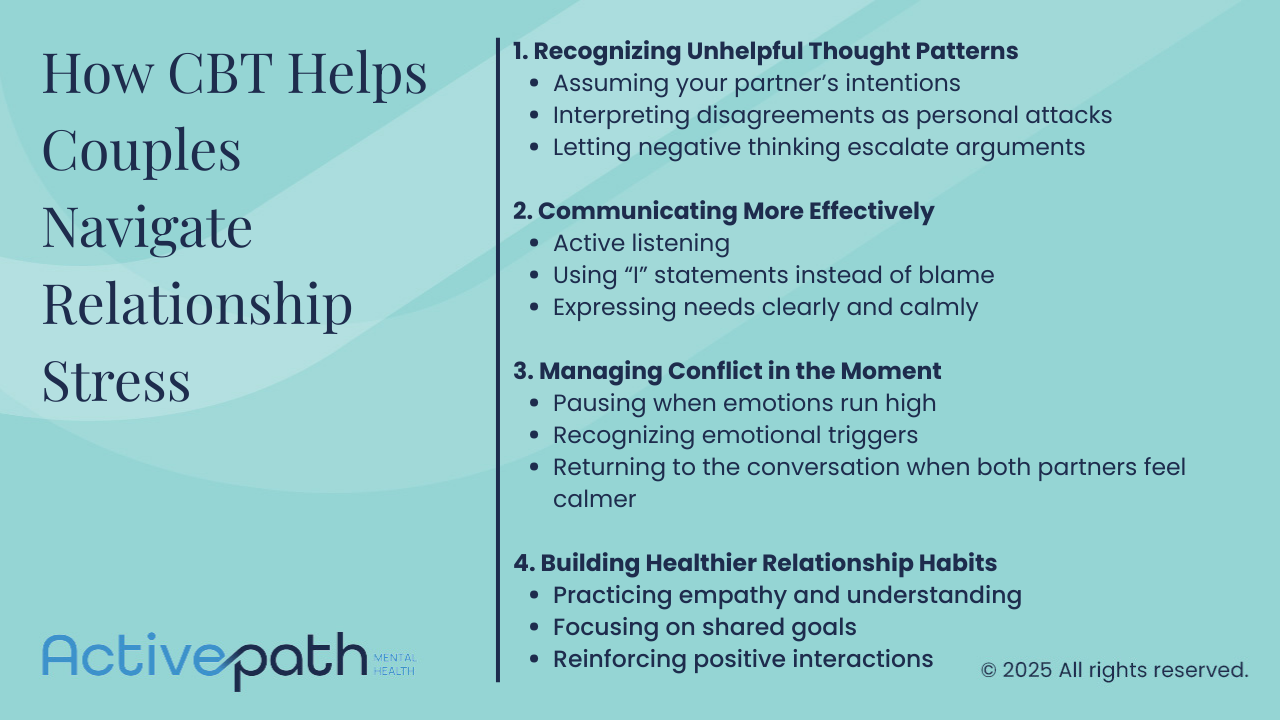
CBT helps couples:
- Identify unhelpful thought patterns
- Build healthier communication habits
- Develop practical coping skills for managing conflict
- Improve emotional regulation during disagreements
Through CBT, couples begin to recognize how their reactions influence the relationship dynamic. Over time, they learn new strategies for responding to stress, frustration, and misunderstandings.
Many couples find that these skills significantly improve overall relationship satisfaction.
Other Therapy Approaches That Support Couples
While CBT is a powerful tool for improving communication and problem-solving, therapists may also incorporate other evidence-based approaches depending on each couple’s needs.
Emotionally Focused Therapy (EFT)
Emotionally focused therapy helps couples strengthen their emotional bond by addressing patterns of disconnection and insecurity within the relationship.
EFT helps partners:
- Understand each other’s emotional needs
- Move out of negative cycles of conflict
- Rebuild trust and emotional safety
This approach focuses on helping couples reconnect emotionally, which often leads to deeper understanding and stronger long-term relationships.
The Gottman Method
Another evidence-based approach used by many therapists in Salem is the Gottman Method, which focuses on improving communication and resolving conflicts in healthier ways.
Couples learn skills such as:
- Active listening
- Expressing needs using “I” statements
- Managing disagreements without escalation
Therapists may also teach tools like the Time-Out Protocol, which helps partners pause and de-escalate heated arguments before they turn into damaging conflicts.
How Therapy Supports Both Partners
One of the most important aspects of therapy is recognizing that both partners play a role in the relationship dynamic.
Sometimes couples arrive at therapy believing one person is the problem. In reality, relationship patterns are often shared and influenced by both partners’ communication styles, emotional histories, and stress responses.
A licensed therapist or licensed clinical social worker helps couples explore these dynamics with compassion and curiosity rather than blame.
Therapy helps couples:
- Develop a deeper understanding of each other’s perspectives
- Learn how to support one another during difficult moments
- Identify shared goals for the relationship
When both partners actively engage in the healing process, relationships often become stronger and more resilient.
What to Expect From the Therapy Process
At Active Path Mental Health, the therapy process is designed to create a supportive environment where couples feel safe discussing difficult topics.
The process often begins with an initial assessment where the therapist learns about the couple’s relationship history, current challenges, and goals for therapy.
From there, couples may participate in:
- Joint therapy sessions with both partners present
- Individual sessions to explore personal experiences affecting the relationship
- Skill-building exercises to improve communication and conflict resolution
Therapists may also address related concerns such as:
- Depression or anxiety
- Trauma or complex trauma
- Substance use
- Anger management challenges
- Stress related to major life transitions
The goal is to support the whole person and the relationship as a system, helping both partners move toward healthier communication and emotional well-being.
When Couples Should Consider Therapy
Couples often wait until relationship problems feel overwhelming before seeking help. However, therapy can be helpful long before issues reach that point.
Couples may benefit from relationship counseling if they notice:
- Ongoing conflict or arguments
- Difficulty communicating effectively
- Emotional distance or lack of intimacy
- Stress from parenting, careers, or life transitions
- Concerns about separation or divorce
Seeking help early can often prevent problems from escalating and create a stronger foundation for the relationship.
Finding Therapists in Salem
Salem offers several counseling services for couples seeking support. Many therapists in Salem provide both in-person and online counseling options, making it easier for couples to access care.
At Active Path Mental Health, our clinicians specialize in helping couples navigate relationship challenges, mood disorders, anxiety, and trauma-informed care within a compassionate and collaborative environment.
Building a Stronger Relationship Together
Relationships require effort, patience, and understanding — especially during stressful seasons of life. But when couples have the right support and tools, meaningful change is possible.
Talk therapy for spouses in Salem can help partners rebuild trust, resolve conflicts, and strengthen emotional connection. By learning new ways to communicate and support one another, couples can move beyond relationship distress and create a more fulfilling life together.
At Active Path Mental Health, our therapists are committed to helping couples grow through challenges and build healthier relationships.
Because when both partners feel heard, supported, and understood, the path toward healing and connection becomes much clearer.
If relationship stress is affecting your daily life, schedule a consultation with a licensed therapist at Active Path Mental Health in Salem.