
Anxiety can show up in dozens of ways. Maybe your mind races before bed, you replay conversations for hours, or you avoid situations because the worry feels too intense. For some people, therapy provides the tools needed to manage those symptoms. For others, anxiety remains disruptive even after they understand their triggers and practice coping strategies consistently.
That is often when the question comes up: Should I consider anxiety medication?
There isn’t a single point when everyone with anxiety should begin medication. The right approach depends on your symptoms, their severity, how long they have been present, your medical history, and how much anxiety is interfering with daily life. Some people do well with therapy alone. Others benefit from medication management, and many use both as part of an individualized treatment plan.
At Active Path Mental Health, we help patients in Kirkland, Salem, and surrounding communities understand their anxiety treatment options and decide which combination of care best fits their needs.
Take the next step toward calmer, more manageable days with personalized anxiety treatment at Active Path Mental Health.
When Is Therapy Enough for Anxiety?
For many people, therapy is an effective first-line treatment for anxiety.
Cognitive Behavioral Therapy (CBT) is especially well supported for generalized anxiety disorder, panic disorder, social anxiety disorder, and other anxiety disorders. CBT helps people recognize unhelpful thought patterns, understand how those thoughts influence behavior, and build practical coping strategies. The American Psychiatric Association identifies CBT as a first-line treatment for many anxiety disorders.
Therapy may be enough when anxiety is mild to moderate, and you are still able to participate in everyday responsibilities.
You may still feel nervous or worried, but remain able to:
- Work or attend school
- Maintain relationships
- Sleep reasonably well
- Complete routine tasks
- Participate in activities you enjoy
- Use coping strategies when symptoms increase
Therapy can also be especially useful when anxious feelings are connected to a specific stressor, such as a job change, grief, parenting stress, relationship conflict, trauma, or a major life transition.
How CBT Helps Treat Anxiety
Anxiety often creates repeating cycles.
You feel anxious about a situation, so you avoid it. Avoidance brings short-term relief, but it can reinforce the idea that the situation was dangerous or unmanageable. Over time, the fear may become stronger.
CBT helps people interrupt these cycles by:
- Challenging catastrophic thinking
- Reducing avoidance
- Practicing grounding techniques
- Building tolerance for uncertainty
- Improving problem-solving skills
- Developing healthier routines
- Learning how to manage physical symptoms of anxiety
Therapy also helps patients develop coping skills they can continue using beyond the treatment period.
When Might Medication Be Recommended?
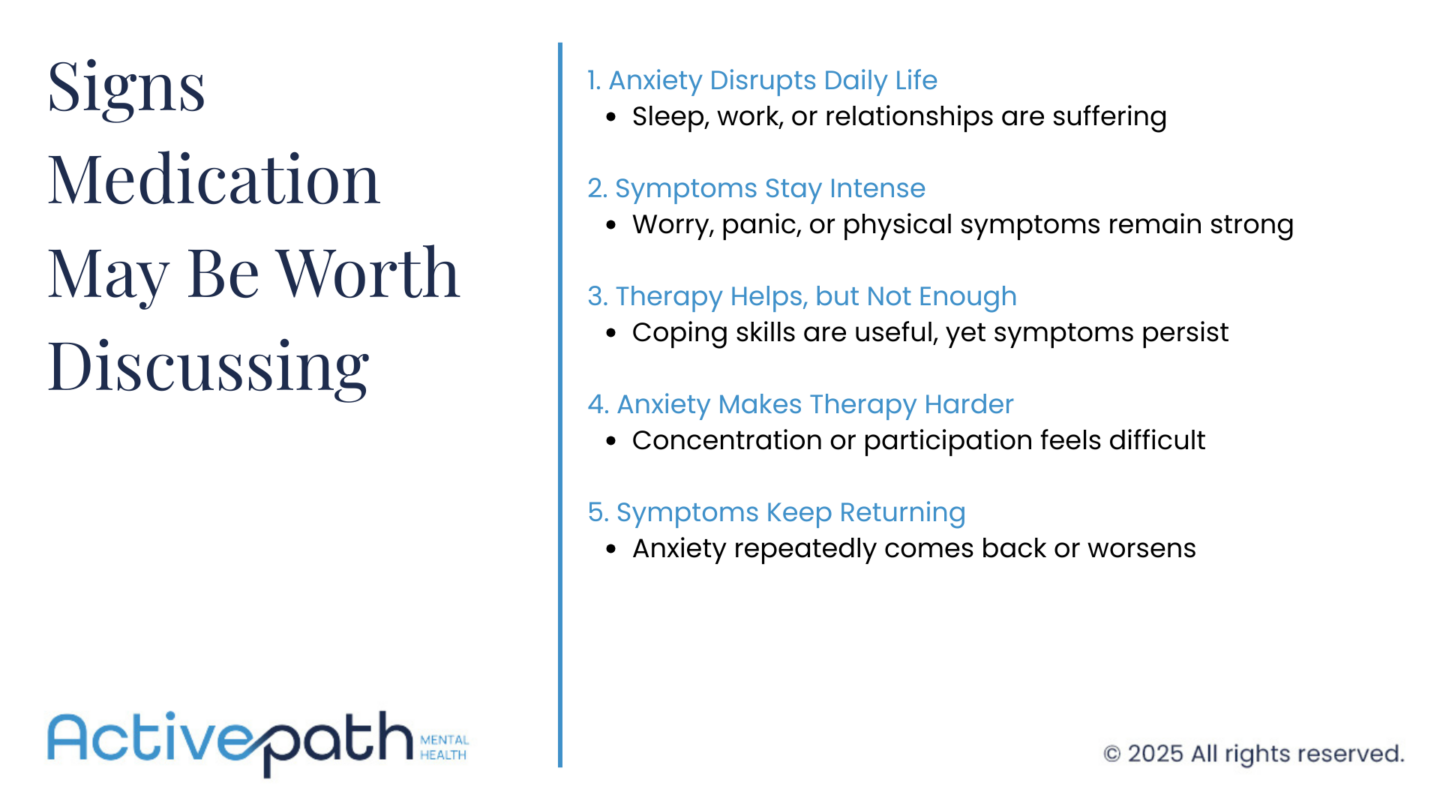
Medication may be worth discussing when anxiety symptoms are persistent, severe, or significantly interfering with daily life.
Therapy alone may be effective for mild anxiety, while medications such as SSRIs or SNRIs may be appropriate for more moderate to severe anxiety disorders.
A psychiatric provider may recommend considering medication when anxiety begins affecting several areas of your life.
Anxiety Is Disrupting Daily Functioning
You may notice:
- Difficulty concentrating
- Frequent panic attacks
- Severe sleep disruption
- Avoiding work, school, driving, travel, or social situations
- Ongoing muscle tension or rapid heartbeat
- Irritability affecting relationships
- Difficulty completing routine responsibilities
- Constant reassurance-seeking
- Feeling unable to quiet anxious thoughts
When severe anxiety becomes this disruptive, medication may help reduce symptom intensity and make everyday life more manageable.
Therapy Has Helped, but Symptoms Remain Strong
Some people make meaningful progress in therapy but continue experiencing intense physical symptoms or persistent worry.
You may understand your triggers and know which coping strategy to use, yet still experience racing thoughts, nausea, trembling, shortness of breath, or a pounding heartbeat. In these situations, anti-anxiety medication may provide additional symptom relief while you continue using the skills developed in therapy.
Anxiety Makes It Difficult to Participate in Therapy
Therapy requires attention, practice, and active participation. Someone experiencing severe panic, insomnia, or nonstop worry may find it difficult to concentrate during sessions or follow through with exercises between appointments.
Medication may help manage symptoms enough for therapy to feel more accessible and productive.
Symptoms Have Persisted Over Time
Occasional anxiety is a normal response to stress. Anxiety disorders involve symptoms that are more persistent and harder to control.
A mental health professional or primary care provider can evaluate whether symptoms may be related to generalized anxiety disorder, panic disorder, social anxiety disorder, obsessive-compulsive disorder, post-traumatic stress disorder, depression, or another mental health condition.
That distinction matters because different disorders may respond to different treatments.
What Types of Anxiety Medication Are Commonly Used?
There are several types of prescription medications used in treating anxiety disorders. The right medication depends on your diagnosis, symptoms, medical history, other medications, side-effect risk, and individual preferences.
SSRIs
Selective serotonin reuptake inhibitors, or SSRIs, are commonly used as a first-line medication treatment for several anxiety disorders.
They may be prescribed for:
- Generalized anxiety disorder
- Panic disorder
- Social anxiety disorder
- OCD
- PTSD
- Major depressive disorder that occurs alongside anxiety
SSRIs work by increasing the availability of serotonin between nerve cells in the brain. They usually take several weeks to begin working. SSRIs commonly take about four to six weeks to produce a noticeable effect.
Possible side effects can include:
- Nausea
- Insomnia
- Headaches
- Changes in appetite
- Sexual dysfunction
Side effects and response vary from person to person.
SNRIs
Serotonin-norepinephrine reuptake inhibitors, or SNRIs, increase the availability of both serotonin and norepinephrine. They are commonly used to treat anxiety and depression and may be prescribed for generalized anxiety disorder, panic symptoms, or other mental health conditions.
As with SSRIs, SNRIs typically take several weeks to work. Potential side effects may include nausea, sleep changes, increased blood pressure, and sexual side effects.
One commonly prescribed SNRI is venlafaxine, sold under brand names such as Effexor XR.
Buspirone
Buspirone is a non-sedating anti-anxiety medication primarily used for generalized anxiety disorder. It acts on serotonin receptors and has a lower risk of dependence than benzodiazepines. It must be taken consistently rather than only when anxiety appears.
Buspirone generally takes about three to four weeks to reach its full effect. Possible side effects include dizziness, drowsiness, or lightheadedness.
Benzodiazepines
Benzodiazepines can provide short-term relief for acute anxiety because they begin working quickly. They enhance the effect of GABA, an inhibitory neurotransmitter in the central nervous system, which can quickly reduce symptoms such as severe fear, panic, and physical tension.
Because benzodiazepines can cause tolerance, dependence, sedation, and impaired coordination, medical professionals usually prescribe them cautiously and often for brief periods. They should also not be mixed with alcohol unless specifically cleared by a prescriber, as doing so can increase sedation and other serious risks.
Never stop a benzodiazepine suddenly without professional medical advice because withdrawal can be serious.
Beta-Blockers
Beta-blockers are medications originally designed for cardiovascular conditions, but they may sometimes be prescribed off-label for situational anxiety.
Rather than changing anxious thoughts, beta-blockers reduce some of the physical symptoms of anxiety, such as:
- Rapid heart rate
- Shaking
- Sweating
- Trembling
They are sometimes used for performance anxiety or stage fright, such as giving a speech or performing in front of an audience.
Other Medications
Other medications may occasionally be considered depending on diagnosis and clinical needs, including tricyclic antidepressants, hydroxyzine, or other antidepressant medicines.
Older antidepressants such as monoamine oxidase inhibitors and tricyclic antidepressants can affect serotonin and norepinephrine, but they are generally used less often because of side-effect profiles, interactions, and the availability of newer options.
Your provider can explain which medications may be appropriate based on your health history and treatment goals.
What Does Medication Management for Anxiety Involve?
Medication management is an ongoing process that includes much more than receiving a prescription.
Your psychiatric provider monitors how the medication is affecting your symptoms and whether adjustments are needed.
During appointments, you may discuss:
- Changes in anxiety
- Panic attacks
- Physical symptoms
- Sleep
- Mood
- Side effects
- Medication consistency
- Other prescriptions or dietary supplements
- Alcohol or substance use
- Changes in physical health
- Whether the current dose is effective
Finding the right anxiety medication sometimes requires trial and error. Choosing the most effective treatment can take time and may involve trying different therapies or medications. Open communication with your prescriber is an important part of this process.
Medication Changes Should Be Supervised
Talk with your provider before reducing, stopping, or changing a psychiatric medication.
Some medications require gradual tapering to reduce withdrawal symptoms or prevent a sudden return of anxiety. Your prescriber can help you make those adjustments safely.
Can Therapy and Medication Work Better Together?
For many people, yes.
Medication and therapy address anxiety from different directions. Medication can reduce the intensity of symptoms, while therapy helps people build coping strategies and change the thought or behavior patterns that keep anxiety going.
For example, a person with generalized anxiety disorder may use an SSRI or SNRI to reduce constant worry and physical tension while using CBT to work on catastrophic thinking and avoidance.
Someone with panic disorder may use medication to reduce panic symptoms while therapy helps them become less fearful of the sensations associated with panic attacks.
This combination may be especially useful when anxiety is moderate to severe or when symptoms are interfering with a person’s ability to use therapy skills consistently.
Ultimately, the best treatment plan depends on the individual.
How Does Your Provider Choose an Anxiety Treatment?
A provider may consider:
- Your diagnosis
- Severity of symptoms
- How long symptoms have been present
- Previous therapy
- Previous medication
- Other mental health conditions
- Medical history
- Current prescriptions
- Family history
- Risk factors
- Personal preferences
- Side-effect concerns
Anxiety can also overlap with depression, OCD, PTSD, and other mental health disorders, which may influence medication selection.
Your provider may also rule out physical conditions that can mimic anxiety symptoms, such as thyroid problems or certain heart conditions.
Lifestyle Habits Can Support Anxiety Treatment
Lifestyle habits can support treatment, although they should not replace appropriate care when anxiety is severe.
Helpful strategies may include:
- Consistent sleep
- Regular physical activity
- Limiting excessive caffeine
- Balanced nutrition
- Mindfulness
- Spending time with supportive people
- Creating predictable routines
- Limiting or avoiding alcohol when advised by your provider
Talk with your provider before adding dietary supplements, because some can interact with prescription medications.
How Active Path Approaches Anxiety Treatment
At Active Path Mental Health, care is based on your specific symptoms, history, and preferences.
Depending on your needs, your plan may include:
- Talk therapy
- Cognitive Behavioral Therapy (CBT)
- Medication management
- Psychiatric evaluation
- Treatment for anxiety and depression
- Coordination between therapists and psychiatric providers
Someone with mild anxiety may begin with therapy. Someone experiencing more severe symptoms may benefit from medication management alongside therapy.
Your treatment can also change over time as symptoms improve or new needs emerge.
Finding the Right Balance for Your Anxiety
Deciding whether to try therapy, anxiety medication, or both can feel like a major decision, but you do not have to figure it out by yourself.
Pay attention to how anxiety is affecting your sleep, focus, work, relationships, and ability to participate in daily life. Consider whether therapy strategies are helping enough or whether symptoms remain difficult to control. A mental health professional can use that information to recommend anxiety treatment options based on your individual needs.
Contact Active Path Mental Health to discuss therapy, anxiety medication, and medication management options in Oregon and Washington.