
Seeking help for post-traumatic stress disorder can feel vulnerable. A person may be entering treatment while dealing with intrusive memories, sleep problems, anxiety, emotional numbness, or a heightened sense of danger. Even routine parts of mental health care, such as completing an intake form or discussing symptoms with a new provider, can feel overwhelming.
Trauma-informed care is designed to make that experience safer and more respectful. Rather than assuming every patient will feel comfortable with the same process, trauma-informed providers recognize how trauma can affect trust, communication, emotional regulation, and a person’s sense of control.
This approach doesn’t require clients to disclose every detail of what happened before receiving support, and instead, it creates a foundation of safety, transparency, collaboration, and choice. For people exploring PTSD treatments, that foundation can make it easier to build trust, remain engaged in care, and participate in the healing process at a manageable pace.
If PTSD symptoms are affecting your daily life,Active Path can help you explore safe, evidence-based treatment options.
A Quick Look at Trauma-Informed Care
- Trauma-informed care recognizes that past experiences may affect how someone feels and responds during treatment.
- Its core priorities include safety, trust, collaboration, empowerment, and personal choice.
- It is not one specific therapy or a replacement for evidence-based PTSD treatment.
- Trauma-focused treatments may include Cognitive Processing Therapy, Prolonged Exposure, or other approaches recommended for PTSD.
- A respectful treatment setting helps clients participate without feeling pressured, judged, or stripped of control.
What Does “Trauma-Informed Care” Actually Mean?
Trauma-informed care is an approach that recognizes how common trauma is and how deeply it can affect a person’s mental, emotional, and physical well-being.
Trauma may result from experiences such as:
- Abuse or neglect
- Sexual or domestic violence
- Serious accidents or medical emergencies
- Military service or combat
- Sudden loss
- Natural disasters
- Community violence
- Repeated discrimination or instability
Two people may live through similar events and respond very differently. Trauma-informed providers don’t make assumptions about how someone “should” feel or recover. Rather, they recognize that trauma responses are personal and may appear as anxiety, avoidance, irritability, emotional detachment, difficulty concentrating, sleep disruption, or physical tension.
The Substance Abuse and Mental Health Services Administration describes a trauma-informed approach through four broad actions: realizing the widespread effects of trauma, recognizing its signs, responding through trauma-informed practices, and resisting retraumatization.
In practice, that means a provider considers not only which treatment may help but also how care is delivered.
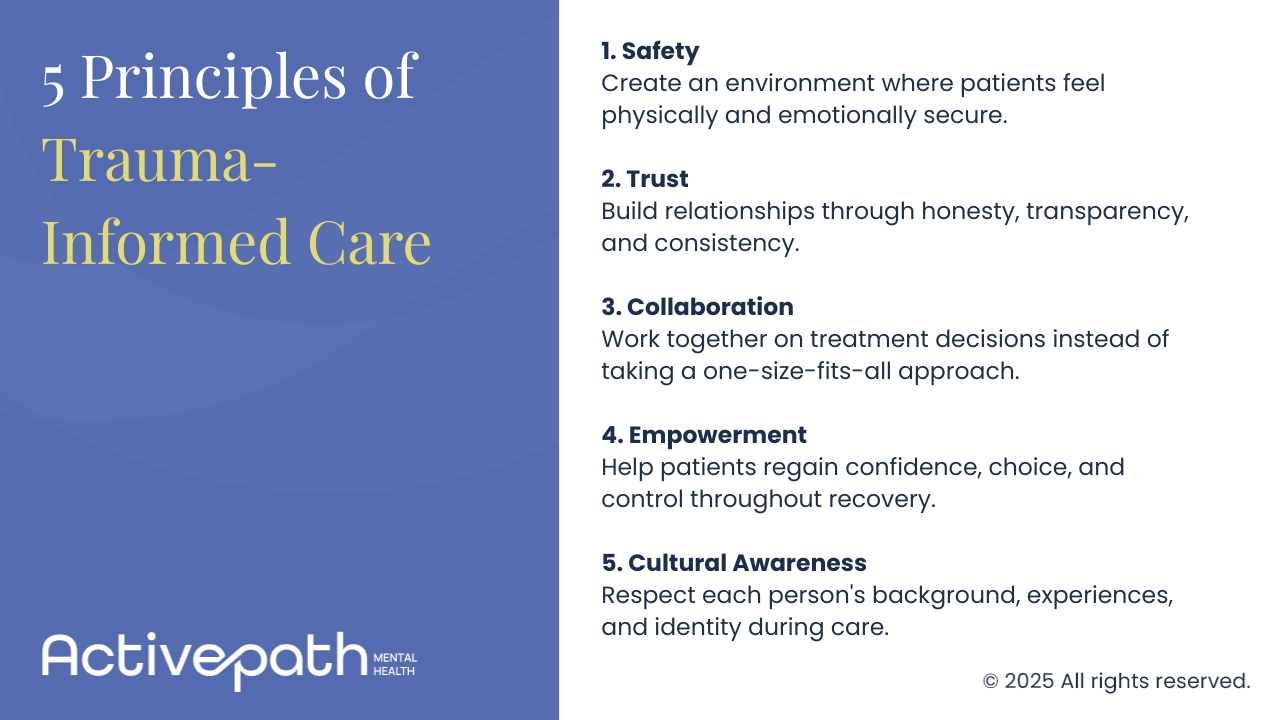
Safety
Clients should feel physically and emotionally safe in the treatment environment. This may include clear explanations, predictable appointments, respectful communication, and sensitivity to possible triggers.
Safety doesn’t mean therapy will never feel challenging. The reality is that healing from PTSD may involve discussing distressing thoughts, emotions, or memories. The difference is that these conversations happen with preparation, consent, and support rather than pressure.
Trust and Transparency
People who have experienced trauma may find it difficult to trust providers, systems, or unfamiliar environments. A trauma-informed therapist explains what to expect, why questions are being asked, and how information will be used.
Clients should never have to guess what will happen next or feel that decisions are being made without them.
Collaboration
Trauma-informed care treats the client as an active participant rather than a passive recipient of treatment. The provider brings clinical expertise, while the client brings essential knowledge about their experiences, needs, limits, and goals.
Together, they create a treatment plan that feels both clinically appropriate and personally manageable.
Empowerment and Choice
Trauma often involves a loss of control. Because of that, restoring a person’s sense of agency is an important part of trauma-informed care.
Clients may be offered choices about appointment format, pacing, treatment goals, coping tools, or how much they want to discuss during a session. Providers should respect boundaries while helping clients gradually build confidence and stability.
Cultural Awareness
A person’s culture, identity, gender, family history, community, and experiences with discrimination may all shape how trauma is understood and expressed. Trauma-informed care takes these factors seriously rather than treating every client’s experience as identical.
Trauma-Informed Care Is Not the Same as Trauma-Focused Therapy
These terms are related, but they’re not interchangeable.
Trauma-informed care describes the overall framework used to provide services in a safe, collaborative, and respectful way.
Trauma-focused therapy refers to specific treatments that directly address traumatic memories, beliefs, avoidance patterns, and PTSD symptoms.
Evidence-based trauma-focused treatments may include:
- Cognitive Processing Therapy
- Prolonged Exposure
- Trauma-focused Cognitive Behavioral Therapy
- Eye Movement Desensitization and Reprocessing
A provider can use trauma-informed principles throughout any service, including intake, medication management, talk therapy, and care coordination. When clinically appropriate, those principles may support a more focused PTSD treatment plan.
Trauma-informed care alone shouldn’t be presented as a cure for PTSD. Its value lies in creating the conditions in which appropriate PTSD treatments can be delivered with greater attention to safety, trust, and the individual’s needs.
How Can Trauma-Informed Approaches Support People With PTSD?
PTSD can affect how the brain and body respond to perceived threats. Someone may feel constantly alert, become overwhelmed by reminders of the trauma, avoid certain situations, or struggle to feel safe even when no immediate danger is present.
A trauma-informed approach acknowledges that these reactions aren’t character flaws and may be protective responses that developed after an overwhelming experience.
That shift in perspective can reduce shame. Instead of asking why someone is being difficult, distant, or resistant, a trauma-informed provider considers what may be contributing to the response and what would help the person feel safer.
It Reduces the Risk of Retraumatization
Retraumatization can occur when an experience recreates feelings of fear, helplessness, or loss of control associated with earlier trauma.
In mental health care, this risk may increase when a client:
- Feels pressured to disclose details before they are ready
- Does not understand what a provider is doing or why
- Feels ignored when expressing discomfort
- Has little input into treatment decisions
- Encounters unexpected touch, sounds, questions, or procedures
Trauma-informed providers cannot guarantee that treatment will never feel uncomfortable, but they can reduce unnecessary distress. They explain processes, request consent, respect boundaries, and prepare clients for what to expect.
It Helps Build a Stronger Therapeutic Relationship
Trust is central to successful therapy, but it may take time for someone with PTSD to feel comfortable relying on another person.
A skilled provider does not interpret that hesitation as a lack of commitment. Instead, the therapist works consistently to establish safety and reliability.
Over time, the client may become more comfortable discussing difficult experiences, asking questions, expressing disagreement, and practicing new coping strategies.
It Supports Emotional Regulation
Before directly processing traumatic memories, some clients need help recognizing triggers and managing intense emotional or physical responses.
Early therapy may include skills such as:
- Grounding techniques
- Mindful breathing
- Identifying signs of activation
- Creating a coping plan
- Developing sleep-supportive routines
- Practicing self-compassion
These tools don’t erase trauma, but they may help clients remain present and recover more effectively when distress arises.
It Allows Treatment to Move at an Appropriate Pace
Avoiding trauma reminders can maintain PTSD symptoms, which is why some effective therapies involve gradually approaching difficult memories or situations. However, moving too quickly without preparation or collaboration can leave a client feeling overwhelmed.
Trauma-informed care balances therapeutic progress with careful pacing. The goal isn’t to avoid every difficult subject, but to approach treatment intentionally, with clear expectations and support.
It Encourages Continued Engagement in Care
Someone who feels dismissed, judged, or pressured may stop attending therapy. A respectful and collaborative environment can make it easier to remain involved, even when treatment becomes emotionally demanding.
Consistency matters because many PTSD treatments require active participation over multiple sessions. Feeling heard and involved in decisions can help clients stay connected to the process.
What Should Clients Look for in a Trauma-Informed Treatment Setting?
The words “trauma-informed” may appear on many provider websites, but clients should also look at how those principles show up in practice.
A trauma-informed setting should make you feel respected, informed, and included from the beginning.
1. Clear Explanations
Your provider should explain:
- What the intake process involves
- Why certain questions are being asked
- What treatment options are available
- What you may experience during therapy
- How progress will be evaluated
You should have opportunities to ask questions before agreeing to a treatment plan.
2. Respect for Boundaries
A trauma-informed provider should never pressure you to share detailed memories before you are ready or before a treatment plan calls for that work.
You may still be gently challenged as part of therapy, but your concerns and limits should be taken seriously.
Your provider should discuss options with you rather than simply telling you what will happen. That may include deciding which symptoms to address first, discussing the benefits and risks of different approaches, or adjusting the pace of treatment.
4. Individualized Care
Trauma recovery is not one-size-fits-all. A treatment plan should consider:
- Your current symptoms
- The effect of PTSD on daily life
- Your physical and mental health history
- Your support system
- Previous treatment experiences
- Your goals and preferences
- Any co-occurring depression or anxiety
Some clients may benefit from trauma-focused therapy. Others may need to begin with stabilization, medication management, or treatment for another condition that is interfering with recovery.
5. Evidence-Based Treatment Options
Compassion and safety matter, but clients should also receive care grounded in clinical evidence.
Ask potential providers:
- What experience do you have treating PTSD?
- Which trauma-focused therapies do you use?
- How do you decide when someone is ready for trauma processing?
- How do you respond when a client becomes overwhelmed?
- How will we track whether treatment is helping?
6. Attention to the Whole Person
PTSD may affect sleep, relationships, concentration, physical health, work, and daily routines. It may also occur alongside depression, anxiety, substance use, or other mental health challenges.
A trauma-informed provider considers the full impact of symptoms rather than focusing on one isolated concern.
What Can Trauma-Informed PTSD Treatment Look Like at Active Path?
At Active Path Mental Health, care begins with understanding what each person is experiencing and how those symptoms affect daily functioning.
The treatment process may include:
A Thoughtful Assessment
Your provider may ask about symptoms, sleep, mood, anxiety, relationships, medical history, previous treatment, and current safety concerns.
You should be told why sensitive questions are relevant, and you can ask for clarification or express when something feels difficult.
A Personalized Treatment Plan
Care may include talk therapy, medication management, or coordination with other mental health services. Recommendations should reflect your symptoms and clinical needs rather than applying the same approach to every client.
Ongoing Communication
Treatment needs may change over time. Your provider should check in about progress, side effects, concerns, and whether the current plan still feels useful.
Trauma-informed care isn’t limited to just the first appointment. It should shape communication and decision-making throughout the entire healing process.
Creating a Safer Path Toward PTSD Healing
Healing from trauma doesn’t require forgetting what happened or forcing yourself to discuss everything at once. It involves developing greater safety, stability, understanding, and freedom from the symptoms that interfere with your life.
Trauma-informed care supports that process by recognizing the effects of trauma while protecting each client’s dignity, autonomy, and voice. When combined with appropriate evidence-based PTSD treatment, it can create a stronger foundation for meaningful recovery.
If trauma symptoms are affecting your sleep, relationships, work, or sense of safety, Active Path Mental Health is here to help you explore care that respects your experiences and supports your next step. Reach out to us today.