
High-functioning depression can be difficult to recognize—especially in professionals, parents, and individuals who appear successful from the outside. Many people experiencing this form of depression continue managing work responsibilities, family obligations, and daily routines. But internally, they may be struggling with persistent low mood, fatigue, or emotional distance that quietly affects their well-being.
Unlike more visible forms of clinical depression or major depressive disorder, people with high functioning depression often continue functioning in their daily life while experiencing ongoing depression symptoms. Because they can maintain careers, relationships, and responsibilities, their struggles may go unnoticed by others—and sometimes even by themselves.
At Active Path Mental Health, we frequently see individuals who seem outwardly successful but are experiencing a steady erosion of motivation, emotional energy, and joy. Recognizing the signs of high functioning depression is often the first step toward getting the support needed to regain balance and well-being.
If daily life feels heavier than it used to, Active Path Mental Health can help you explore treatment options and build a plan for lasting well-being.
What Is High-Functioning Depression?
High-functioning depression is not an official clinical diagnosis listed in the Diagnostic and Statistical Manual of Mental Disorders. Instead, it is a term commonly used to describe individuals who maintain their responsibilities while experiencing ongoing depressive symptoms.
Many people experiencing high-functioning depression continue performing well in their careers, caring for their families, and maintaining social relationships. However, beneath the surface they may feel emotionally exhausted, disconnected, or persistently sad.
According to the National Institute of Mental Health, depression can affect how people think, feel, and manage daily activities such as sleeping, working, or interacting with others.
In many cases, this experience overlaps with persistent depressive disorder (PDD), a chronic form of depression characterized by persistent low mood lasting two years or longer.
While symptoms may appear milder than those associated with major depression, they can still significantly affect a person’s quality of life.
People with high-functioning depression often report:
- An ever-present low mood or persistent sadness
- Feeling emotionally “flat” or disconnected from joy
- Chronic fatigue or low energy
- Difficulty experiencing pleasure in activities once enjoyed (known as anhedonia)
- Irritability or increased emotional sensitivity
- Changes in sleep patterns or appetite
- Difficulty concentrating or completing daily tasks
Despite these challenges, individuals often continue fulfilling responsibilities, which makes the condition easy to overlook.
High-functioning depression often goes unnoticed because people become skilled at masking their emotional distress while maintaining their daily routines.
A Key Early Sign: Loss of Motivation
One of the earliest warning signs of high-functioning depression is a subtle but persistent loss of motivation.
Clinicians sometimes refer to this as lassitude, a symptom that reflects difficulty initiating tasks and maintaining momentum.
As Dr. Pritham Raj, Chief Medical Officer at Active Path, explains, lassitude refers to a person’s “get up and go—your ability to get things done, get things started like you want to.”
For high-functioning individuals, this change often appears before other classic depression symptoms. Instead of feeling obviously sad or hopeless, people may simply notice that everyday tasks require more effort than they used to.
Dr. Raj notes that many people initially describe the experience not as sadness, but as a loss of momentum.
“It’s not necessarily ‘I’m feeling down, depressed, or hopeless.’ It often starts with ‘I can’t get going the way I want to.’”
Someone who once started their day easily may begin lingering in bed longer, procrastinating on tasks, or struggling to build momentum throughout the day.
“They wake up in the morning and go, ‘I’m struggling a little bit more to get going.’”
Because the change happens gradually, many people attribute it to stress, exhaustion, or simply having too much on their plates.
But as Dr. Raj points out, this symptom can quietly signal that depression is developing.
“That is one of those tricky, less well talked about elements of depression that we see sneak up on people.”
Recognizing this early loss of motivation can help people seek support before symptoms begin to affect other areas of their life.
When Depression Begins Affecting Daily Functioning
Everyone experiences sadness occasionally. Depression, however, involves something more significant than temporary emotional lows.
As Dr. Raj notes, “we’re not talking about feeling sad, which is a normal part of everyday life.” Instead, depression becomes a concern when it begins interfering with a person’s ability to function.
Even individuals with high-functioning depression may notice subtle changes such as:
- Difficulty completing daily tasks
- Persistent fatigue despite adequate sleep
- Reduced productivity at work
- Withdrawal from social activities
- Loss of enthusiasm for hobbies
Although responsibilities may still be managed, the internal effort required to maintain those routines can feel incredibly draining.
Other Common Signs of High-Functioning Depression
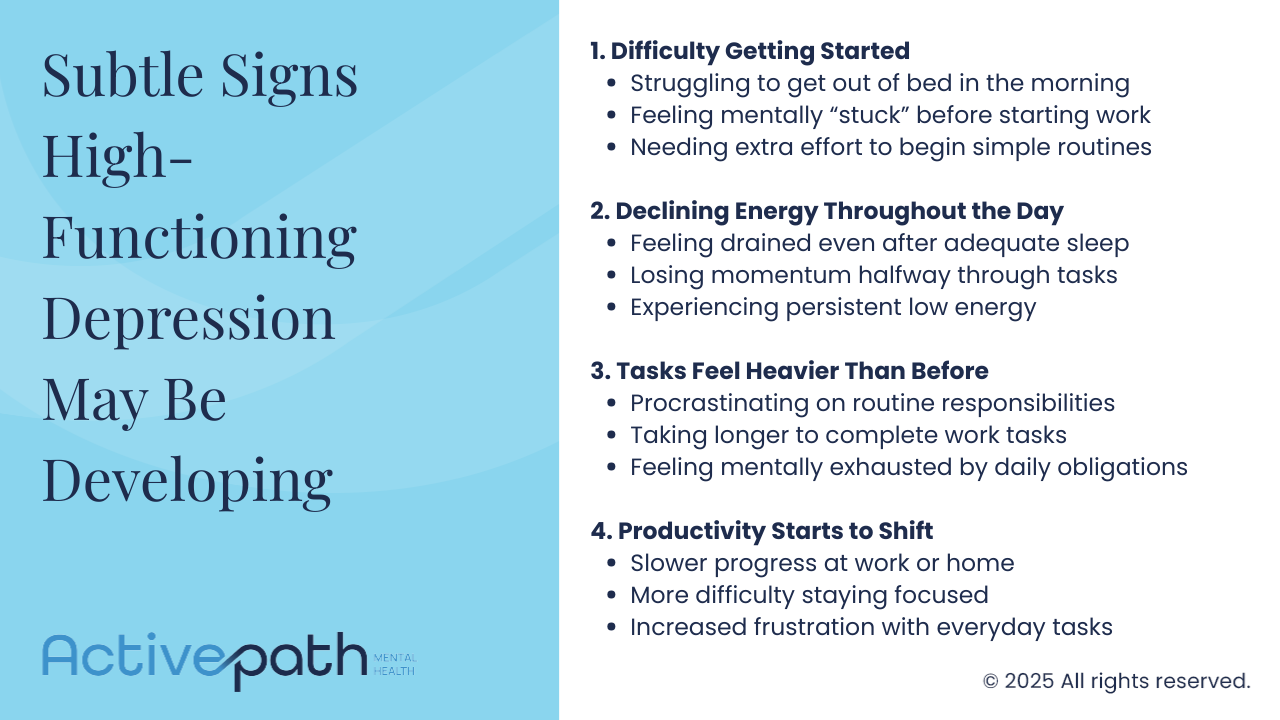
High-functioning depression often develops gradually, making the symptoms easy to dismiss as stress or burnout.
Common signs and symptoms include:
- Persistent low mood or sadness
- Chronic fatigue or low energy
- Feeling emotionally numb or disconnected
- Increased irritability
- Difficulty concentrating
- Loss of pleasure in activities once enjoyed
- Changes in appetite or sleep patterns
- Feelings of inadequacy or low self-esteem
People with high-functioning depression may also mask their struggles by overworking or maintaining a carefully managed image to the outside world.
Because they appear capable and successful, friends and family may not realize that the individual is experiencing significant emotional distress.
When Should Someone Seek Professional Help?
Another important signal that someone may benefit from support is when they begin losing the activities and connections that once supported their well-being.
People experiencing depression often withdraw from the habits that previously helped them maintain balance. These can include social interactions, exercise, spiritual practices, or hobbies.
Dr. Raj notes that many individuals experiencing depression begin retreating from things like “laughing, engaging with other people socially… or even physical activity.”
Sleep is another major indicator clinicians pay attention to when evaluating mental health.
Poor sleep is strongly associated with low mood and worsening depression symptoms. If someone who previously slept well begins experiencing insomnia or disrupted sleep patterns, it may signal a deeper issue.
Other signs that it may be time to seek professional help include:
- Loss of motivation or energy
- Reduced physical activity
- Emotional withdrawal from family or friends
- Persistent fatigue
- Difficulty enjoying previously meaningful activities
Recognizing these changes early can help individuals seek support before symptoms become more severe.
Treatment Options for High-Functioning Depression
The good news is that high-functioning depression is highly treatable once it is recognized.
Treatment often includes a combination of approaches tailored to the individual’s needs.
Talk Therapy
Talk therapy, including cognitive behavioral therapy (CBT), is one of the most common treatment options. CBT helps individuals identify negative thought patterns and develop healthier coping skills.
Other approaches, such as interpersonal psychotherapy, can help individuals strengthen relationships and improve emotional awareness.
Working with a licensed therapist or mental health professional can help people develop tools to better manage stress, anxiety, and depressive symptoms.
Medication
In some cases, medication may be recommended to help regulate mood.
Common medications include selective serotonin reuptake inhibitors (SSRIs), which help balance neurotransmitters involved in mood regulation.
Medication management is typically guided by experienced healthcare professionals to ensure safe and effective treatment.
Advanced Treatments
For individuals whose symptoms persist despite traditional treatments, additional options may be available.
These may include:
- Transcranial Magnetic Stimulation (TMS)
- Electroconvulsive Therapy (ECT)
These treatments can be effective for individuals experiencing chronic or treatment-resistant depression.
Lifestyle Changes
Lifestyle changes can also play an important role in managing symptoms.
Research shows that strategies such as:
- Regular physical activity
- Maintaining a balanced diet
- Practicing mindfulness
- Prioritizing sleep
- Engaging in enjoyable activities
can support both mental health and physical health.
These approaches help restore energy, improve mood, and strengthen emotional resilience.
Why Early Recognition Matters
High-functioning depression often goes unnoticed because individuals continue performing well in many areas of life. However, untreated depression can eventually lead to burnout or more severe depressive episodes.
Recognizing the early signs and seeking professional help can make a meaningful difference.
With the right support, individuals can regain motivation, improve emotional well-being, and reconnect with the activities and relationships that give life meaning.
At Active Path Mental Health, our team works with individuals experiencing a wide range of mental health challenges, including high-functioning depression. Our goal is to help each person build a personalized treatment plan that supports long-term recovery and a more fulfilling life.
You don’t have to wait until symptoms become overwhelming—talking with a licensed therapist can help you regain balance and energy. Contact us today.